Tuesday, February 14, 2012

Bioinformatics for Geneticists: A Bioinformatics Primer for the Analysis of Genetic Data


 By Michael R. Barnes

A fully revised version of the successful First Edition, this one-stop reference book enables all geneticists to improve the efficiency of their research.
The study of human genetics is moving into a challenging new era. New technologies and data resources such as the HapMap are enabling genome-wide studies, which could potentially identify most common genetic determinants of human health, disease and drug response. With these tremendous new data resources at hand, more than ever care is required in their use. Faced with the sheer volume of genetics and genomic data, bioinformatics is essential to avoid drowning true signal in noise. Considering these challenges, Bioinformatics for Geneticists, Second Edition works at multiple levels: firstly, for the occasional user who simply wants to extract or analyse specific data; secondly, at the level of the advanced user providing explanations of how and why a tool works and how it can be used to greatest effect. Finally experts from fields allied to genetics give insight into the best genomics tools and data to enhance a genetic experiment.

Hallmark Features of the Second Edition:
  • Illustrates the value of bioinformatics as a constantly evolving avenue into novel approaches to study genetics
  • The only book specifically addressing the bioinformatics needs of geneticists
  • More than 50% of chapters are completely new contributions
  • Dramatically revised content in core areas of gene and genomic characterisation, pathway analysis, SNP functional analysis and statistical genetics
  • Focused on freely available tools and web-based approaches to bioinformatics analysis, suitable for novices and experienced researchers alike
Bioinformatics for Geneticists, Second Edition describes the key bioinformatics and genetic analysis processes that are needed to identify human genetic determinants. The book is based upon the combined practical experience of domain experts from academic and industrial research environments and is of interest to a broad audience, including students, researchers and clinicians working in the human genetics domain.


Saturday, November 26, 2011

Biochemical Engineering and Biotechnology


Ghasem Najafpour | Elsevier Science | 2011-12-13 | 438 pages | English | PDF


Extensive application of bioprocesses has generated an expansion in biotechnological knowledge, generated by theapplication of biochemical engineering to biotechnology. Microorganisms produce alcohols and acetone that are used in industrial processes. The knowledge related to industrial microbiology has been revolutionized by the ability of genetically engineered cells to make many new products. Genetic engineering and gene mounting has been developed to enhance industrial fermentation. Ultimately, these bioprocesses have become a new way of developing commercial products. 


Biochemical Engineering and Biotechnology demonstrates the application of biological sciences in engineering with theoretical and practical aspects to enhance understanding of knowledge in this field. The book adopts a practical approach,showing related case studies with original research data. It is an ideal text book for college and university courses, which guides students through the lectures in a clear and well-illustrated manner. 
· Demonstrates the application of biological sciences in engineering with theoretical and practical aspects.

· Unique practical approach, using case studies, detailed experiments, original research data and problems and possible solutions.

· Gives detailed experiments with simple design equations and the required calculations.


Monday, August 22, 2011

Artificial Intelligence for Games, Second Edition

Artificial Intelligence for Games, Second Edition by Ian Millington, John Funge
MK | 2009 | ISBN: 0123747317 | 896 pages | PDF | 15 MB


Creating robust artificial intelligence is one of the greatest challenges for game developers, yet the commercial success of a game is often dependent upon the quality of the AI. In this book, Ian Millington brings extensive professional experience to the problem of improving the quality of AI in games. He describes numerous examples from real games and explores the underlying ideas through detailed case studies. He goes further to introduce many techniques little used by developers today. The book's associated web site contains a library of C++ source code and demonstration programs, and a complete commercial source code library of AI algorithms and techniques.

"Artificial Intelligence for Games - 2nd edition" will be highly useful to academics teaching courses on game AI, in that it includes exercises with each chapter. It will also include new and expanded coverage of the following: AI-oriented gameplay; Behavior driven AI; Casual games (puzzle games).

* The first comprehensive, professional tutorial and reference to implement true AI in games written by an engineer with extensive industry experience.
* Walks through the entire development process from beginning to end.
* Includes examples from over 100 real games, 10 in-depth case studies, and web site with sample code.

Download

Artificial Intelligence A Systems Approach

M. Tim Jones, "Artificial Intelligence: A Systems Approach " Chapman | 2007 | ISBN: 0977858235 | 500 pages | PDF | 6,5 MB


 This book offers students and AI programmers a new perspective on the study of artificial intelligence concepts. The essential topics and theory of AI are presented, but it also includes practical information on data input & reduction as well as data output (i.e., algorithm usage). Because traditional AI concepts such as pattern recognition, numerical optimization and data mining are now simply types of algorithms, a different approach is needed. This sensor / algorithm / effecter approach grounds the algorithms with an environment, helps students and AI practitioners to better understand them, and subsequently, how to apply them. The book has numerous up to date applications in game programming, intelligent agents, neural networks, artificial immune systems, and more. 

DNA Fingerprinting in Plants: Principles, Methods, and Applications, Second Edition

Kurt Weising, Hilde Nybom, Kirsten Wolff, Gunter Kahl «DNA Fingerprinting in Plants: Principles, Methods, and Applications, Second Edition» Publisher: CRC | Edition: 2005 | ISBN: 0849314887 | PDF | 475 pages | 4 Mb


Given the explosive development of new molecular marker techniques over the last decade, newcomers and experts alike in the field of DNA fingerprinting will find an easy-to-follow guide to the multitude of techniques available in DNA Fingerprinting in Plants: Principles, Methods, and Applications, Second Edition. Along with step-by-step annotated protocols, the authors fully discuss the technical aspects and modifications of existing techniques, the influence of reaction components and conditions, and the analysis of the results. This second edition has been completely revised to address the exponential changes in the field since the first edition, focusing on PCR-based techniques but also including more sophisticated ones. The authors include numerous case studies to illustrate applications of the methods, more than 1600 references to the literature, and descriptions of reagent formulation, equipment, and computer programs used for evaluating molecular marker data. They compare the various methods, including the costs and benefits of each, helping readers determine which is best suited to a particular application. The well-rounded, cross-referenced, and unified nature of this book makes it intrinsically easier to follow than the edited, multi-authored books currently available. It is an absolute necessity on the lab bench of anyone involved in plant research, DNA profiling, and molecular markers.

Forensic DNA Typing Protocols (Methods in Molecular Biology)

by Angel Carracedo
Publisher: Humana Press | November 30, 2004 | ISBN: 1588292649 | Pages: 296 | PDF | 5.27 MB


A state-of-the-art collection of readily reproducible laboratory methods for DNA identity analysis, including Y chromosome haplotyping, mtDNA, and SNP typing. The book offers well-tested protocols for DNA quantification using real-time PCR on forensic samples and for the determination of the number of amelogenine gene copies. For forensic geneticists, there are readily reproducible methods for species identification, ancient DNA, and pharmacogenetics. Additional chapters address new applications in the forensic genetics lab, such a species identification or typing of CYP polymorphisms for the analysis of adverse to drugs.

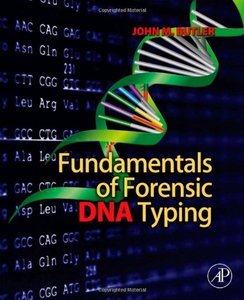
Fundamentals of Forensic DNA Typing

John Butler
Ac emic P ss | ISBN : 0123749999 | 2009 | 519 pages | PDF | 2,8 MB   


John Butler, bestselling author of Forensic DNA Typing, now applies his expertise on the subject of DNA analysis into an introductory textbook. Fundamentals of Forensic DNA Typing walks students step-by-step through the DNA analysis process beginning with collection of evidence at a crime scene to the statistical interpretation of the results.

Also included are brief discussions of such news worthy topics as victim identification from the September 11, 2001 attacks, the identification of the remains of the Romanovs, the last Russian Royal family, and the O.J. Simpson case. New applications, such as genetic genealogy and tracing domestic pet hairs to perpetrators, are also detailed. With its clear and understandable style and extensive list of online ancillaries and study aids, this textbook will make the subject accessible to students in forensic science courses worldwide.


Saturday, August 6, 2011

beginning programming with java for dummies e-book

by Barry Burd


  • Covering everything from basic Java development concepts to the latest tools and techniques used in Java, this book will put would–be programmers on their way to Java mastery
  • Explores what goes into creating a program, how to put the pieces together, dealing with standard programming challenges, debugging, and making it work
  • Updated for the release of the Java SDK 2.0, with all examples revised to reflect the changes in the technology


A Practical Guide to Designing for the Web e-book

Mark Boulton


A Practical Guide to Designing for the Web aims to teach you techniques for designing your website using the principles of graphic design.Featuring five sections, each covering a core aspect of graphic design: Getting Started, Research, Typography, Colour, and Layout. Learn solid graphic design theory that you can simply apply to your designs, making the difference from a good design to a great one.

Friday, August 5, 2011

Mastering Perl for Bioinformatics e-book

by James Tisdall 
Publisher: O'Reilly Media | ISBN: 0596003072 | edition 2003 | CHM | 377 pages | 1 mb


“Mastering Perl for Bioinformatics covers the core Perl language and many of its module extensions, presenting them in the context of biological data and problems of pressing interest to the biological community. This book, along with Beginning Perl for Bioinformatics, forms a basic course in Perl programming. This second volume finishes the basic Perl tutorial material (references, complex data structures, object-oriented programming, use of modules--all presented in a biological context) and presents some advanced topics of considerable interest in bioinformatics. Biologists and computer scientists who have conquered the basics of Perl and are ready to move even further in their mastery of this versatile language will appreciate the author's well-balanced approach to applying Perl's analytical abilities to the field of bioinformatics. Full of practical examples and real-world biological problem solving, this book is a must for any reader wanting to move beyond beginner level Perl in bioinformatics.”